Original vs. Fake Vetements Clothing: How to Spot the Differences

Introduction
Vetements is known for its distinctive graphics, statement lettering, unconventional proportions, and contemporary streetwear aesthetic. These features make its clothing appealing to fashion enthusiasts, but they can also make online shopping confusing when product photos, descriptions, and seller claims are difficult to verify.
If you are comparing original vs. fake Vetements clothing, it is important to look beyond a logo or a single detail. Product labels, construction, graphics, seller transparency, and verifiable purchase information can all help you assess a listing. However, no single visual clue can conclusively establish authenticity, especially when you are shopping online.
This guide explains practical checks to make before purchasing a Vetements hoodie, T-shirt, jacket, or other streetwear item. It also covers common warning signs and ways to reduce the risk of buying a counterfeit product.
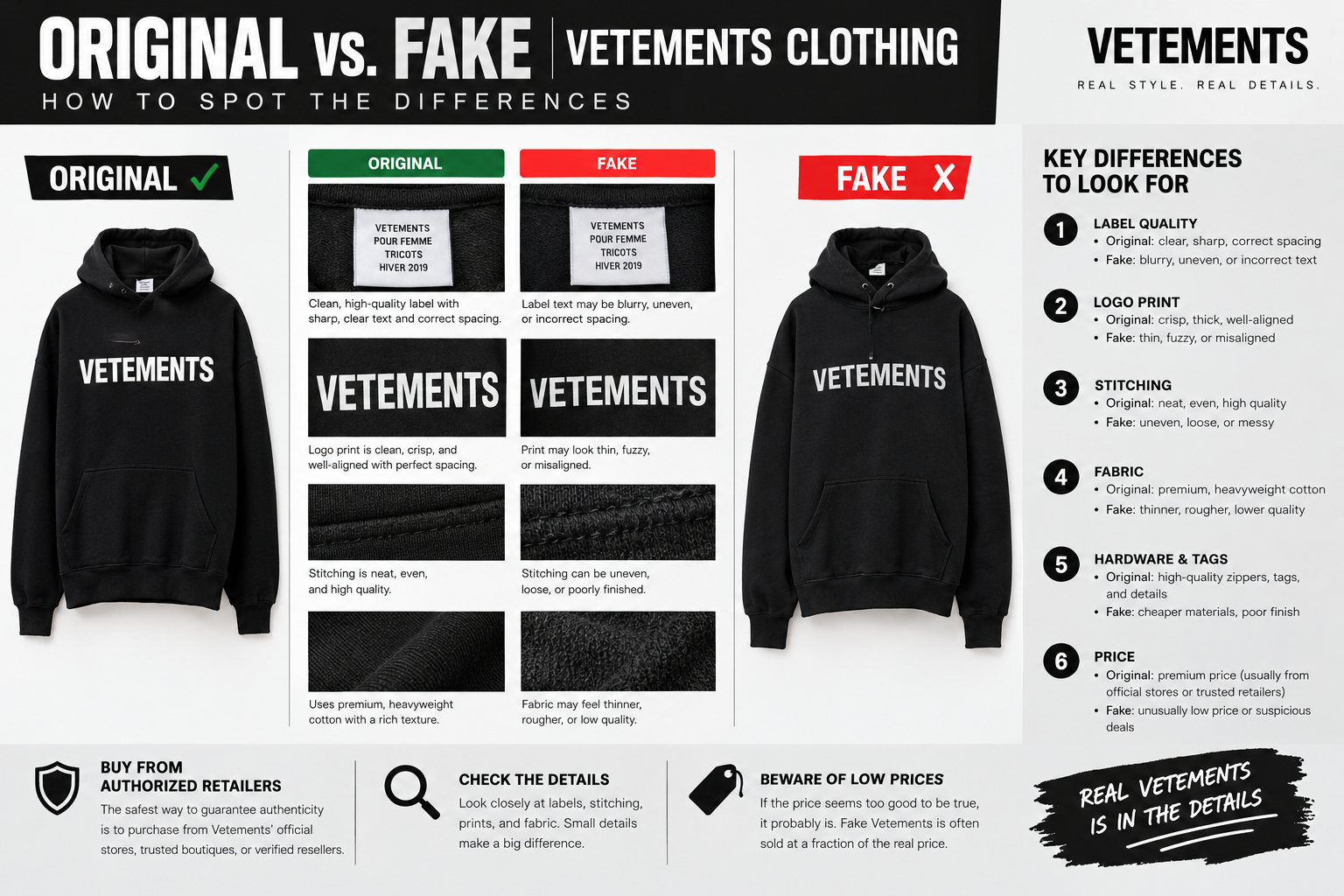
1. Examine the Neck Label and Care Tags
Labels are a useful starting point when evaluating a garment. Depending on the specific item and production season, you may find a brand label, size information, fabric composition, care instructions, and other identifying details.
When reviewing a listing, consider these checks:
- Spelling and typography: Look for obvious spelling errors, inconsistent lettering, or poorly reproduced text.
- Label construction: Examine whether the label appears securely attached and reasonably well finished.
- Care information: Check whether the garment includes relevant material and washing information.
- Consistency: Compare the labels with reliable references for the same product, rather than assuming every Vetements item uses an identical label.
Be careful with conclusions. Label designs can vary between products and seasons, and counterfeit products may copy genuine-looking labels. A neat label alone does not prove authenticity.
2. Check the Quality of Stitching and Construction
Construction can reveal useful information about how a garment was made. Inspect the seams, hems, cuffs, and areas where different fabric panels meet.
Look for uneven stitching, loose threads, poorly finished edges, or seams that appear to be coming apart. On hoodies, pay attention to the cuffs, waistband, hood, pockets, and zipper area. On T-shirts, examine the shoulder seams, neckline, sleeves, and bottom hem.
Keep the garment’s design in mind. Vetements styles can intentionally feature unusual proportions, distressed details, or unconventional construction. A relaxed silhouette or an unconventional finish is not automatically evidence of a counterfeit.
The more useful question is whether the overall construction matches reliable information and detailed images of the specific item you intend to buy.
3. Compare Graphics, Logos, and Prints
Graphics are often a major part of Vetements’ visual identity. Logo placement, lettering, artwork, and print scale can differ from one design to another, so comparisons should be made against the same product rather than a different item from the brand.
Before purchasing, check:
- The spelling and spacing of any printed text.
- The placement and proportions of the graphic.
- Whether the print appears sharp or visibly distorted in clear photographs.
- Whether the artwork and color arrangement match reliable images of the exact product.
- Whether the seller provides close-up images instead of relying entirely on promotional pictures.
A slightly different image angle or lighting can change how a print looks on screen. Ask for additional photographs when the details are unclear, and avoid making a final judgment from a single low-resolution image.
4. Evaluate Fabric and Feel
Fabric quality can help you assess a garment, although photographs cannot reliably reveal how material feels in person.
When available, review the listed fabric composition, garment weight, texture, and care instructions. Compare these details with trustworthy product information for the same item. Be cautious if the seller provides vague material descriptions or avoids answering basic questions about the product.
For a Vetements Hoodie, inspect the hood, cuffs, seams, and fabric surface. For a Vetements T-Shirt, check the neckline, body shape, print, and stated fabric composition.
Do not assume that every genuine garment must feel heavy, stiff, or exceptionally thick. Fabric varies by design, and weight alone is not a dependable authenticity test.
5. Check the Product’s Fit and Measurements
Vetements is associated with distinctive silhouettes, including styles that may look longer, wider, or more relaxed than conventional clothing. However, not every item has the same fit.
Before ordering, compare the seller’s measurements with the product’s listed size information. Useful measurements include:
- Chest width
- Shoulder width
- Body length
- Sleeve length
- Waist measurement for trousers or tracksuits
Ask whether the measurements were taken with the garment laid flat and whether they are approximate. This helps you assess fit and can expose listings with incomplete or inconsistent information.
Explore Vetements Tracksuits and Vetements Jackets by comparing each item’s own measurements and design details rather than relying on a universal sizing rule.
6. Be Careful With Prices That Seem Too Good to Be True
Price is an important warning sign, but it is not proof of authenticity. Genuine items can be discounted, particularly through legitimate resale or clearance channels, while counterfeit listings may use prices that look realistic.
Be cautious when a seller advertises a supposedly genuine designer item at an unusually low price but provides no credible explanation, clear product photos, or verifiable purchasing information.
Before buying, consider:
- Whether the discount seems plausible for the product and its condition.
- Whether the seller clearly distinguishes new, used, and damaged items.
- Whether the price includes shipping, taxes, and other fees.
- Whether the seller makes pressure-based claims such as “buy immediately or lose the offer.”
- Whether the seller can explain where the item came from.
Avoid treating a high price as proof of authenticity, too. A counterfeit listing can be expensive, and a low price can have legitimate explanations. Consider the full evidence rather than price alone.
7. Research the Seller Before Placing an Order
Seller transparency is one of the most useful factors when shopping online. A professional-looking website or social media account does not automatically mean that its products are authentic.
Look for clear contact information, a written returns policy, realistic delivery estimates, and detailed product descriptions. Check independent reviews where available, paying attention to repeated complaints about counterfeit goods, missing deliveries, or refund difficulties.
You should also verify whether the seller has a credible source for the item. For expensive purchases, consider established retailers or resale platforms that provide authentication services and explain their procedures.
A seller’s use of phrases such as “100% authentic” should not be accepted as proof on its own. Ask what evidence supports the claim and what protection is available if the item is misrepresented.
8. Request Clear, Item-Specific Photographs
When shopping online, generic product images may not show the actual garment being sold. Ask for current photographs of the specific item, particularly if it is pre-owned or offered by a third-party seller.
Useful photos include:
- Front and back views.
- Close-ups of the neck label and care tags.
- Detailed images of the logo or graphic.
- Seams, cuffs, hems, and closures.
- Any flaws, repairs, or signs of wear.
- Additional identifying details relevant to the particular product.
If the seller refuses reasonable requests or repeatedly sends unrelated stock photos, consider that a warning sign. Images can be copied from other listings, so clear photographs are helpful but cannot independently guarantee authenticity.
9. Review Packaging and Purchase Documentation
Packaging, receipts, and order documentation can provide additional context, especially when the item is represented as new. Check whether the seller can supply a credible purchase record or explain the item’s history.
However, packaging and receipts can also be copied or fabricated. A dust bag, hangtag, branded box, or printed receipt should never be treated as definitive evidence.
When possible, verify documentation through the original seller or a relevant retailer. If you are buying a second-hand item, ask for a clear explanation of its ownership and condition.
10. Understand the Limits of Online Authenticity Checks
There is no single checklist that can conclusively authenticate every Vetements garment. Designs, labels, materials, and construction can change across product lines and seasons. Counterfeit products can also imitate many visible details.
For a high-value purchase, consider a qualified authentication service with experience in the relevant product category. Review what its assessment covers and whether it provides a clear explanation of its limitations.
If you already own the garment and remain uncertain, keep your order confirmation, payment records, seller communications, and photographs. These records may be useful if you need to request a return, dispute a transaction, or seek further assessment.
11. Where to Find Vetements-Inspired Streetwear
If you enjoy the look of contemporary designer streetwear, focus on choosing products that match your style, budget, and expectations. Explore different silhouettes, graphic treatments, and layering options before deciding what to buy.
You can browse our Vetements Sweatshirts alongside hoodies, T-shirts, tracksuits, and jackets to compare available styles. Our broader Vetements collection brings together different clothing categories for shoppers exploring this aesthetic.
When researching the Vetements brand, use reliable product references and seller information to make informed decisions. Searches for Vetements, Vetements clothing, Vetements official website, vetement, and Vetements fashion may lead to different websites and listings. Always check the identity of the site you are visiting; a page’s use of a brand name does not establish official affiliation or authorization.
Frequently Asked Questions
How can I tell if Vetements clothing is fake?
Review the labels, construction, graphics, fabric details, measurements, seller reputation, and purchase documentation. Compare the item with reliable references for the exact product. No single visual feature is enough to prove authenticity.
Does a low price mean Vetements clothing is fake?
Not necessarily. Discounts and second-hand sales can be legitimate, but unusually low prices combined with vague descriptions, copied images, or an untrustworthy seller deserve extra caution.
Are genuine Vetements labels always the same?
No. Labels and garment details may vary by product, season, and production run. Compare the label with reliable references for the specific item instead of relying on one universal rule.
Can packaging prove that a Vetements item is authentic?
No. Packaging, hangtags, and receipts can be copied. They may support an assessment, but they should be considered alongside other evidence.
Should I buy Vetements clothing from a third-party seller?
You can reduce risk by checking the seller’s reputation, return terms, product-specific photographs, and available purchase documentation. For costly items, consider a seller or resale platform with a clearly explained authentication process.
What should I do if I receive an item that may be counterfeit?
Save the order confirmation, payment records, listing screenshots, and seller messages. Contact the seller promptly and review the marketplace’s return or dispute process. If you paid through a payment provider, check its buyer-protection rules and deadlines.
Conclusion
Comparing original vs. fake Vetements clothing requires more than checking a logo, label, or price. Look at the whole picture: construction, graphics, material information, measurements, seller transparency, photographs, and supporting documentation.
Take time to verify the specific product before paying, particularly when buying from an unfamiliar online seller. If the evidence remains uncertain, avoid relying on a seller’s promise alone and consider an independent assessment. Careful research can help you make a better-informed purchase and reduce the risk of an expensive mistake.
Disclaimer: This article is for general educational purposes and does not provide definitive product authentication. This website is an independent retailer and is not officially affiliated with or authorized by Vetements unless explicitly stated and independently verified.